

Tattoo mini: A Complete Guide to Small, Meaningful Tattoos
Small tattoos can be deceptively complex. A tiny design may contain only a few lines, yet every curve, gap, and detail has to work within a limited area of skin. That is why choosing a tattoo mini is not simply about making a larger design smaller. It requires careful consideration of line weight, composition, placement, skin movement, and long-term readability.
For many clients, small tattoos carry deeply personal meanings: a date, a symbol, a flower, a cultural reference, or a quiet reminder of someone important. Others appreciate their understated appearance and flexibility in professional or everyday settings. In this guide, we will explore how professional artists approach small tattoos, from design selection and placement to needle configurations, hygiene, healing, and long-term maintenance.
Why Choose a tattoo mini?
The appeal of a small tattoo often comes from its subtlety. Unlike large-scale work that can dominate an entire body area, a compact design can feel more intimate and personal. It may sit discreetly on the wrist, ankle, forearm, shoulder, or another carefully selected location.
Small tattoos are also versatile. A simple symbol can stand alone, while several small pieces can eventually become part of a larger collection. This makes them particularly attractive to first-time tattoo clients who want to begin with something visually restrained.
However, small does not automatically mean simple. A professional tattoo artist has to understand how the design will interact with the skin over time. Extremely fine details may soften as the tattoo ages, while closely packed lines can visually merge. Good design therefore depends on knowing what the skin can realistically support.
Popular Design Directions for Small Tattoos
The best small tattoo designs usually rely on strong silhouettes and intentional negative space rather than excessive detail. A skilled artist can create visual character with surprisingly few elements.
Common directions include:
- Minimal botanical motifs such as leaves, small flowers, or branches
- Geometric symbols and simple abstract forms
- Tiny animals or insects with recognizable silhouettes
- Initials, dates, or short meaningful lettering
- Celestial motifs such as stars, moons, and simplified constellations
- Cultural or personal symbols with simplified compositions
- Small objects connected to a personal memory or story
The key is to preserve the identity of the design. If a reference contains many tiny decorative elements, an artist may recommend simplifying them rather than reproducing every detail. This is not a compromise in craftsmanship; it is an adaptation to the physical limitations of tattooing.
How to Make a tattoo mini Look Refined
A refined small tattoo usually begins with proportion and hierarchy. The artist determines which elements are essential and which can be removed without weakening the concept.
Line weight is particularly important. A very fine line can produce an elegant result when appropriate, but it should be selected according to the design, placement, skin characteristics, and artist’s technique. A slightly stronger line may sometimes provide better long-term definition.
Negative space is equally valuable. Leaving sufficient separation between elements helps prevent visual congestion as the tattoo naturally settles during healing and aging.
This is one reason professional consultation matters. At VietnamInk, artists can assess a reference image and explain whether it should remain detailed, be simplified, or be redesigned specifically for the chosen placement.
Choosing the Right Placement
Placement affects both appearance and longevity. Two identical designs can look completely different depending on where they are tattooed because skin texture, movement, friction, and sun exposure vary across the body.
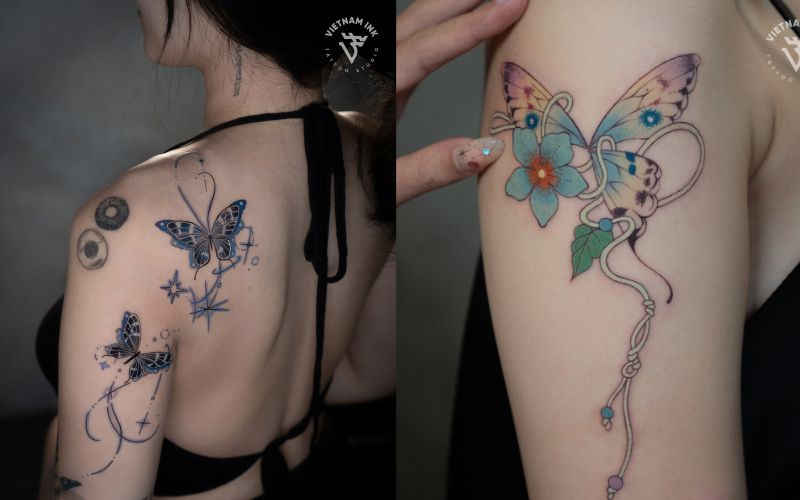
For a small tattoo, clients commonly consider areas such as the inner or outer forearm, upper arm, shoulder, ankle, calf, wrist, or upper chest. Each location has its own practical considerations.
Areas exposed to frequent sunlight may require more diligent sun protection. Locations subject to repeated friction from footwear or clothing may experience different healing conditions. Joints and highly mobile areas can also introduce additional movement into the design.
Before deciding on placement, consider:
- How visible you want the tattoo to be in daily life.
- Whether the skin experiences frequent friction or stretching.
- How much direct sunlight the area receives.
- Whether the location complements the shape of the design.
- How the tattoo may fit with future pieces.
A professional artist should evaluate the anatomy of the area rather than simply placing the design where it appears attractive in a digital mockup.
The Technical Side of Small Tattoos
Small-scale tattooing still requires professional equipment, sterile procedures, and precise control. Depending on the style, an artist may select different needle groupings to achieve the desired line or shading effect.
Fine-line work commonly involves smaller configurations, while other small designs may benefit from slightly more substantial groupings to establish clean contours or controlled solid areas. Needle selection should never be determined by size alone.
Ink quality also matters. Professional tattoo studios use inks from reputable manufacturers and follow appropriate handling and storage procedures. Sterile, single-use needle cartridges and properly prepared work surfaces are fundamental components of safe tattoo practice.
At VietnamInk, hygiene is treated as part of the artistic process rather than a separate consideration. Proper skin preparation, clean equipment handling, fresh disposable materials, and appropriate barrier protection help reduce avoidable contamination risks.
Skin Preparation and the Tattooing Process
Before tattooing begins, the artist evaluates the selected area and prepares the skin. The surface should be clean and appropriately prepared before stencil placement and tattooing.
The stencil gives the client an opportunity to assess scale and positioning before permanent work begins. This stage should not be rushed, particularly with a small design where a few millimeters can noticeably change the visual balance.
During tattooing, the artist controls needle depth, hand speed, machine movement, and ink saturation. Going too aggressively can cause unnecessary trauma to the skin, while insufficient saturation can affect how the finished tattoo looks after healing.
An experienced artist works within the skin’s tolerance rather than trying to achieve maximum saturation in a single aggressive pass.
Healing and Aftercare
Once the tattoo is finished, proper aftercare becomes the client’s responsibility. Healing varies between individuals, but the early period generally requires keeping the area clean and following the specific instructions provided by the tattoo artist.
Clients should avoid unnecessarily touching the fresh tattoo with unwashed hands and should follow their artist’s guidance regarding cleaning and moisturizing. Picking at peeling skin or scratching the area can interfere with normal healing.
During healing, it is also sensible to avoid activities that create excessive friction, soaking, or contamination around the tattoo until the skin has sufficiently recovered. Swimming, prolonged soaking, and environments that may expose the fresh tattoo to contaminants should be avoided according to professional aftercare guidance.
Do not judge the final appearance too early. A freshly tattooed design can look sharper or darker than it will after the skin settles. The healed result is the more meaningful reference point when evaluating the artist’s work.
How Small Tattoos Age Over Time
Every tattoo changes gradually as the skin ages. Sun exposure, natural skin changes, placement, pigment saturation, and the original design all influence how it looks years later.
For small tattoos, spacing is particularly important. Lines that are extremely close together may become less visually distinct over time. This is why experienced artists often recommend preserving enough negative space rather than attempting to fit every detail from a reference image.
Sun protection is one of the simplest long-term maintenance habits. Once the tattoo has fully healed, protecting exposed skin from excessive ultraviolet exposure can help preserve the appearance of the tattoo and the surrounding skin.
Touch-ups may occasionally be appropriate, but they should be considered after the tattoo has completely healed and settled. A professional artist can determine whether a touch-up is actually necessary.
Choosing an Artist for Your Small Tattoo
When comparing tattoo artists, look beyond photographs of freshly completed work. Review healed tattoos whenever possible. Healed examples provide more useful information about line consistency, saturation, spacing, and how an artist’s work settles into the skin.
Pay attention to whether the artist regularly works in the style you want. An artist known for large traditional pieces may have a different approach to fine-line or miniature work than someone who specializes in delicate compositions.
You should also feel comfortable discussing:
- Design modifications and simplification
- Appropriate placement
- Expected healing
- Needle and technique considerations
- Hygiene procedures
- Aftercare
- Potential long-term changes
A consultation should feel like a technical conversation, not simply a transaction. At VietnamInk, the goal is to connect design decisions with the client’s anatomy, preferences, and long-term expectations.
Is a Small Tattoo Right for You?
A small tattoo can be an excellent choice when the design has a clear visual concept and the client understands its limitations. It is particularly suitable for people who appreciate understated body art or want a meaningful symbol without committing to a large composition.
The most important consideration is not how small the tattoo can be made, but how well the design will function at its intended size. A professional artist may occasionally recommend making a design slightly larger than originally requested because additional space can improve readability and long-term stability.
Ultimately, good tattooing is an exercise in balance: artistic intention, anatomy, technique, safety, and time all need to work together.
Conclusion
A tattoo mini can be understated while still carrying considerable artistic and personal significance. Its success depends on more than selecting a small reference image. Design simplicity, negative space, line weight, placement, skin preparation, professional technique, healing, and long-term sun protection all contribute to the final result.
The strongest small tattoos are designed for the skin rather than merely copied onto it. Before booking, consider how the design will look when healed, discuss realistic expectations with an experienced artist, and choose a studio that takes hygiene and craftsmanship seriously. For more inspiration and professional guidance, explore VietnamInk.vn or consult VietnamInk artists about custom design, placement, and responsible aftercare.